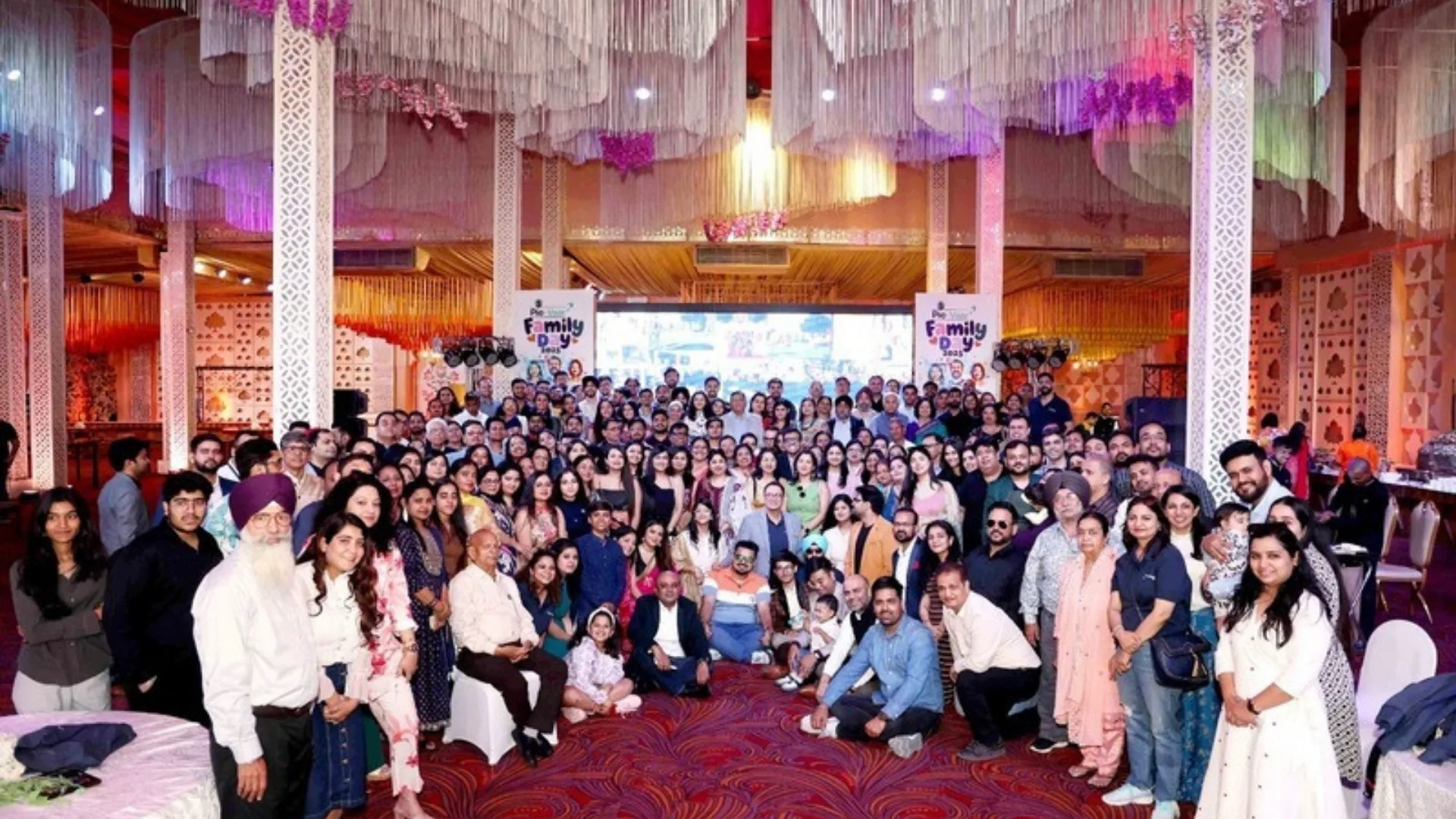
The Room Was Full. The Business Was Empty.
Five hundred people attended. The production was flawless. The photos looked extraordinary. And yet, three months later, the marketing head couldn't point to a single measurable outcome that justified the spend.
This is not an edge case. It is the quiet epidemic of the event industry - beautiful executions built on ambiguous intentions. The event happened. The business goal did not.
Why Most Events Fail Before They Begin
The failure rarely occurs on the event floor. It occurs in the brief.
Most events are commissioned with instructions like "make it premium" or "we want something different this time." These are aesthetic directives, not strategic ones. When the foundation is visual rather than purposeful, the entire event - no matter how well produced - becomes an exercise in impression management rather than business performance.
The symptoms are familiar: bloated budgets with no clear allocation rationale, guest lists that prioritize volume over relevance, post-event reports filled with footfall numbers and social impressions that tell you everything about reach and nothing about result.
The deeper problem is structural. Events are typically handed to production teams after strategy has already been decided elsewhere - or worse, never decided at all. The brief arrives as a logistics document. The thinking that should precede it never gets written.
What you get is a well-executed event solving the wrong problem.
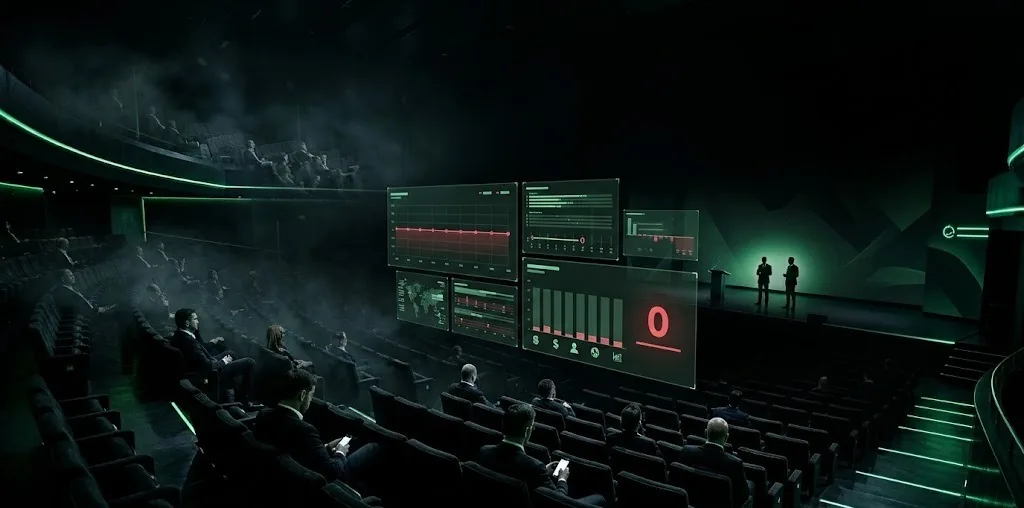
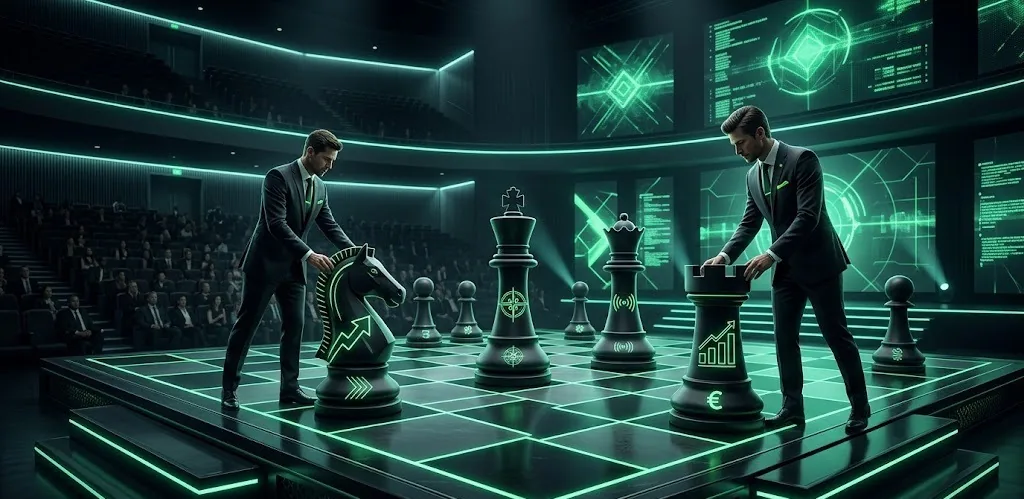
The Shift: From Experience to Strategic Instrument
An event, when designed correctly, is one of the most powerful business tools available to a brand. It compresses time. It creates direct sensory contact between a brand and its audience. It manufactures memory in a way that no media buy, no digital campaign, and no content calendar can replicate.
But that power is contingent on one thing: intention.
The shift required is not about spending more, thinking bigger, or using newer technology. It is about treating the event as a business instrument from the first conversation - not an afterthought to a campaign, not a reward for the sales team, not a line item to be cut when the quarter tightens.
When an event is designed with the same rigour as a go-to-market strategy, it stops being a cost and starts behaving like an investment.
The Framework: Five Decisions That Determine Outcome
1. Objective Definition - Why does this event exist?
Before a single creative concept is considered, one question must be answered with surgical precision: what does success look like in business terms?
Not "create brand awareness." Not "celebrate our anniversary." Those are themes, not objectives. A strategic objective sounds like: "We need to shift the perception of our brand among 200 senior procurement decision-makers from commodity vendor to strategic partner - and generate 40 qualified conversations in a single evening."
That sentence tells you the audience, the desired cognitive shift, the scale, and the measurable outcome. Every creative decision that follows either serves that sentence or it doesn't.
2. Audience Mapping - Who are we actually talking to?
Audience mapping in event strategy is not a headcount exercise. It is a behavioural and motivational profile of the people whose actions, decisions, or perceptions you are trying to move.
Understanding why your audience attends events - what they look for, what makes them disengage, what earns their trust in a room - fundamentally changes how you design the experience. A room full of CFOs needs to feel different from a room full of creative directors, even if the brand presenting to both is identical.
The sharper your audience profile, the more precisely you can engineer the moments that matter.
3. Experience Design - What should they feel, do, and remember?
This is where strategy and craft intersect.
Experience design is not decoration. It is the deliberate choreography of emotion across a timeline. Every touchpoint - from the invitation to the first sensory impression at the entrance to the final interaction before departure - is an opportunity to reinforce or undermine your objective.
The question to ask at every stage is: what do we need this person to feel, do, or believe at this specific moment? The answers to that question become your design brief. Not moodboards. Not references. A clear emotional and behavioral architecture.
4. Engagement Strategy - How do we interact meaningfully?
Passive attendance is the enemy of conversion. An audience that watches is not the same as an audience that participates, and participation is not the same as engagement. True engagement creates a moment of personalised relevance - where the attendee feels seen, addressed, or challenged in a way that feels specific to them.
This might be achieved through curated conversation formats, personalised journeys within a larger event, live demonstrations that invite interaction, or content that provokes a point of view rather than simply communicating a message.
The design question here is not what will we show them - it is what will we invite them to think, respond to, or decide?
5. Conversion & Measurement - What defines success?
Every event should have a defined conversion mechanic - a specific action you want a specific segment of your audience to take, either during or after the event.
This might be scheduling a follow-up meeting, registering for a next phase, signing an MOU, requesting a proposal, or simply agreeing to a conversation. Whatever it is, it must be designed into the event architecture - not hoped for in the follow-up.
Measurement, consequently, should be built around these conversion points: not just how many people attended, but how many of the right people engaged, at what depth, and what they did next.
What This Looks Like in Practice
Consider a B2B technology company launching a new enterprise software platform. The instinct is to hold a launch event - a large venue, a keynote, a product demo, cocktails.
The strategic version of that same brief looks entirely different.
Instead of broadcasting to 500 people, the company hosts three closed-format experiences for 40 people each - segmented by industry vertical. Each session is designed around a specific business problem relevant to that vertical, with the product positioned as the solution to a challenge the audience already feels. The environment is intimate and deliberate. The content is provocative, not promotional. Each attendee leaves with a personalised use-case document prepared in advance.
Result: a smaller room, a deeper impression, and a conversion rate that the 500-person launch could never produce. The event didn't get smaller. It got sharper.
The Technology Layer: Data as a Strategic Advantage
Modern event strategy does not operate on instinct alone. The infrastructure now exists to make events as data-rich as any digital campaign - if that infrastructure is built into the design from the outset.
Behavioural tracking across event touchpoints reveals which activations generated genuine engagement versus polite participation. AI-driven personalisation tools can dynamically adjust content journeys based on real-time audience responses. Hybrid event platforms extend the reach of a physical experience while capturing digital engagement data that would otherwise be invisible.
The critical point is this: technology does not improve a poorly-conceived event. It amplifies whatever is already there. Used within a strategic framework, however, event technology transforms a single-day activation into a data asset - one that informs not just post-event reporting, but the brief for the next one.
Key Takeaways
- Outcome Over Concept: An event without a defined business objective is a production exercise, not a strategic one. Start with the outcome, not the concept.
- Strategic Mapping: Audience mapping is a behavioural and motivational exercise, not a headcount. Know why they're in the room and what will move them.
- Intentional Touchpoints: Experience design is the architecture of emotion across a timeline - every touchpoint is intentional or it is wasted.
- Personalised Relevance: Engagement strategy should create personalised relevance, not passive spectatorship.
- Built-In Measurement: Conversion mechanics and measurement criteria must be designed into the event, not appended to the debrief.
- Tech as an Amplifier: Technology amplifies strategy. Without the strategy layer, it only amplifies noise.
- Sharper is Better: Smaller, sharper, and more intentional almost always outperforms larger, louder, and more general.
The Closing Argument
Events are not line items. They are moments where your brand is physically, emotionally, and commercially present with the people who matter most to your business. That is an extraordinary opportunity - and an extraordinary responsibility.
The brands that understand this stop asking their event partners "what can you produce?" and start asking "what should we achieve?"
That is the conversation we are built for.
Ahaan Singhal
Director of Partnerships & Key Accounts at Going Highway, building the relationships that power its biggest experiences.